
Feeling Stuck in Stress Mode? Five Minutes to Support Your Nervous System
Have you ever reached the end of the day and realised you have barely paused?
You have moved from emails, messages, work, responsibilities and endless decisions without giving your body a moment to catch up.
Many people I see in clinic describe feeling as though they are constantly “switched on”. Their mind feels busy, their shoulders feel tense, and even when they finally stop, relaxing does not always come easily.
Stress is not just something that happens in your thoughts. It is something your whole body responds to.
Creating small moments of pause throughout the day can be a simple way of reminding your nervous system that it is safe to slow down.
And the good news?
It does not need to take an hour of meditation or a complete lifestyle overhaul.
Sometimes, five minutes is a good place to start.
Why Small Moments of Pause Matter
This is where getting practical can make a big difference. Reducing stress is not a destination you eventually arrive at. It is a practice of creating small signals throughout the day that remind your body you are safe.
When we practise calming techniques regularly, they become easier to access during more challenging moments.
Here are three simple practices. Pick the one that resonates the most with you.
Use Your Breath to Calm Your Nervous System
Your breath is one of the few ways you can consciously influence your nervous system.
Stick to the order in the illustration
Breath in
Breath out
Hold
Breath in
It’s crucial to breathe in after the breath hold to activate a relaxation response.
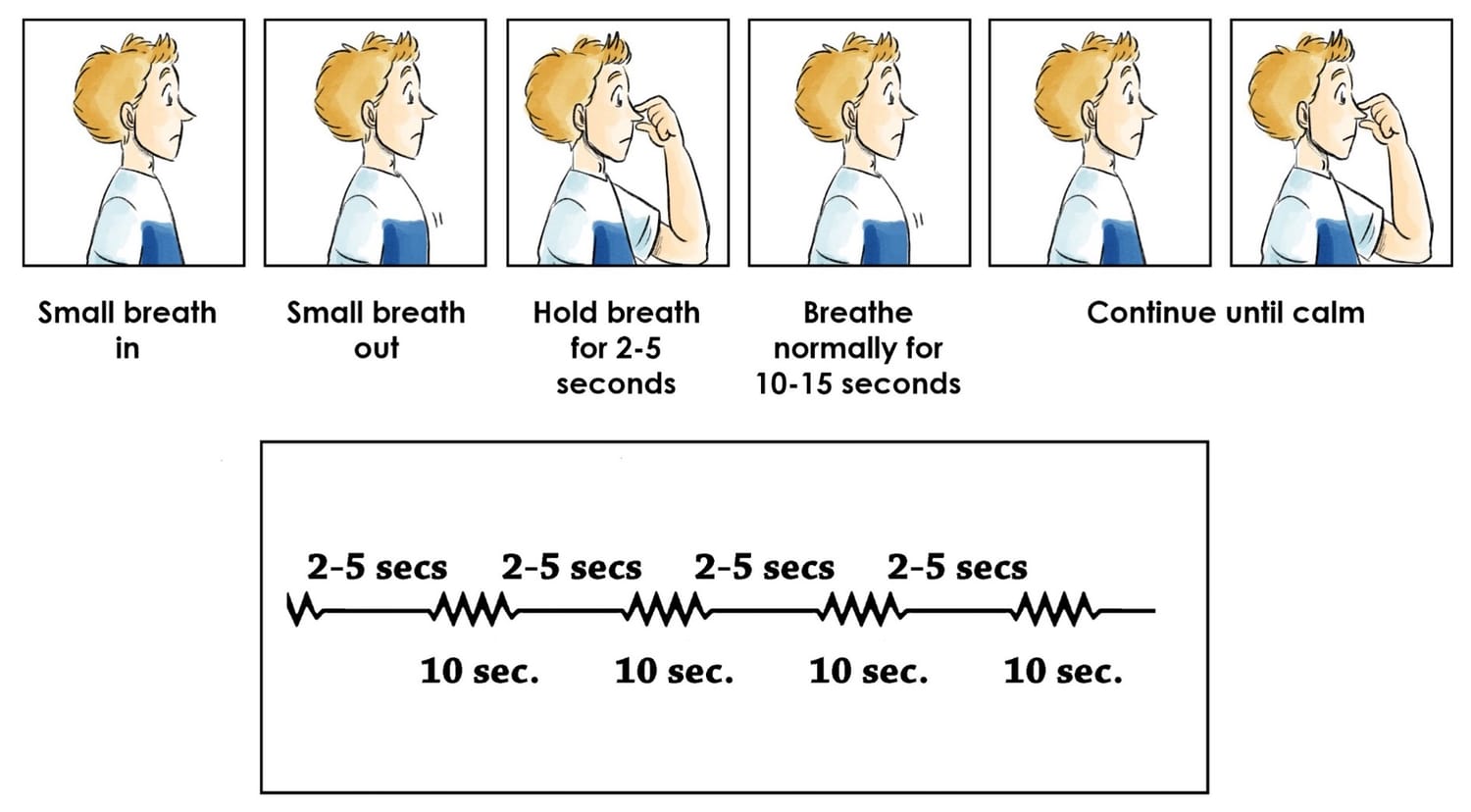
As a breath coach, this is my favourite technique to calm a racing, anxious or irritable mind. It is called the Breathing Recovery. Do it for about three minutes or until you feel calm.
Create a Calmer Start to Your Morning
How are you starting your morning? Are you reaching for your phone, rushing to get other people up or pressing the snooze button?
Instead of doing any of these, programme your alarm two minutes before you have to leave your bed and use this short moment to set your intentions for the day or practice a positive affirmation before going into autopilot.
Setting intentions deliberately interrupts this autopilot cycle, forcing our brain to create new neural pathways and interrupt the same routines and thought patterns not serving us.
If mornings feel like the hardest part of the day, I have shared a simple morning nervous system ritual here.
Spend Five Minutes in Nature
Exposure to nature has been shown to lower cortisol levels - the hormone the adrenal glands produce in response to stress. Reducing this hormone’s levels can lead to feelings of relaxation and calmness.
You can walk through your local park, look out the window while taking a drink break, or have your morning cuppa in the garden.
You get the bonus of receiving natural light in the morning, which has been linked to better sleep.
Why Consistency Matters More Than Perfection
The aim is not to create another thing on your to-do list.
Your nervous system responds well to small, repeated signals.
Five minutes might feel insignificant, but repeated moments of breathing, slowing down and reconnecting with your body can gradually create a different pattern.
Start small.
Choose one practice.
Repeat it often.
When You May Need More Support
Small daily practices can be a helpful place to start, but if stress, anxiety, poor sleep, tension or overwhelm have become part of your everyday life, your nervous system may need more consistent support.
In clinic, I combine acupuncture with naturopathic, nutrition and lifestyle support to look at the bigger picture.
Rather than giving you a generic list of wellness tips, the aim is to create a personalised plan that works with your body, your symptoms and your life.
Want to Work Together?
Explore my services below or go ahead and book your first appointment.

Subscribe to our newsletter
Acupuncture and naturopathy lifestyle advice straight into your inbox
Copyright © 2026 by Sarah Shorter | Website Disclaimer | Privacy Policy