
Why Your Back Pain Might Not Be Coming From Your Back (And How Acupuncture Can Help)
If I asked you to point to where your back pain starts, there's a good chance you'd point to the wrong place.
That might sound odd.
After all, if your lower back hurts, surely that's where the problem is?
Not necessarily.
One of the biggest misconceptions about back pain is that the painful area must also be the source of the problem. In reality, many people develop pain because another part of the body has quietly been working inefficiently for weeks, months or even years.
Your back is often the part that complains. It isn't always the part that started the conversation.
Understanding this changes the way we think about back pain, and it's one of the reasons why some people continue to struggle despite stretching, massage, painkillers or even repeated courses of physiotherapy.
The good news?
Once you understand what's driving your symptoms, treatment becomes much more targeted.
Back pain isn't one condition
People often talk about back pain as though it's a single diagnosis. It isn't.
Two people can both point to exactly the same painful spot on their lower back but have completely different reasons for being in pain.
One person may have overworked muscles after spending twelve hours gardening. Another may have tight hip flexors from years of desk work. Someone else may have irritation around the sacroiliac (SI) joint after returning to running. Another may simply have muscles that have become overprotective following an old injury.
To the person experiencing the pain, all these situations feel similar. To a practitioner assessing them, they can require completely different approaches.
That's why I don't only start by asking: where does it hurt?
Instead, I'm also very interested in questions like:
What were you doing when it started?
Does sitting make it worse?
Is getting out of bed difficult?
Does bending forwards hurt more than standing back up?
Does walking improve it?
Does the pain travel into your leg?
These answers often tell me far more than simply pointing to the painful area.
Traditional acupuncture allows us to look at the whole person, including areas such as stress, sleep, energy and overall balance, while modern approaches such as motor point acupuncture help us understand the structures involved in pain, movement and function.
Did you know?
Many muscles can refer pain away from where they actually sit. The place that hurts isn't always the place that's causing the problem.
Your muscles work as a team
Imagine four people carrying a heavy dining table.
If one person becomes tired, the others don't stop. They work harder.
For a while, everything continues to function.
Eventually though, somebody starts complaining.
Your muscles behave in much the same way.
Walking.
Climbing stairs.
Getting out of a chair.
Picking up a child.
Loading the dishwasher.
These everyday movements rely on dozens of muscles working together. If one muscle isn't contributing effectively, another often compensates.
Initially, you don't notice. Your body is remarkably good at adapting. But over time, those compensating muscles become overloaded.
They tighten.
They fatigue more quickly.
Eventually they become painful.
The muscle that's hurting may simply be the one that's been doing everyone else's job.
I think this is one of the most important things patients can understand.
Pain doesn't always tell us where the problem started. Sometimes it tells us which muscle has finally had enough.
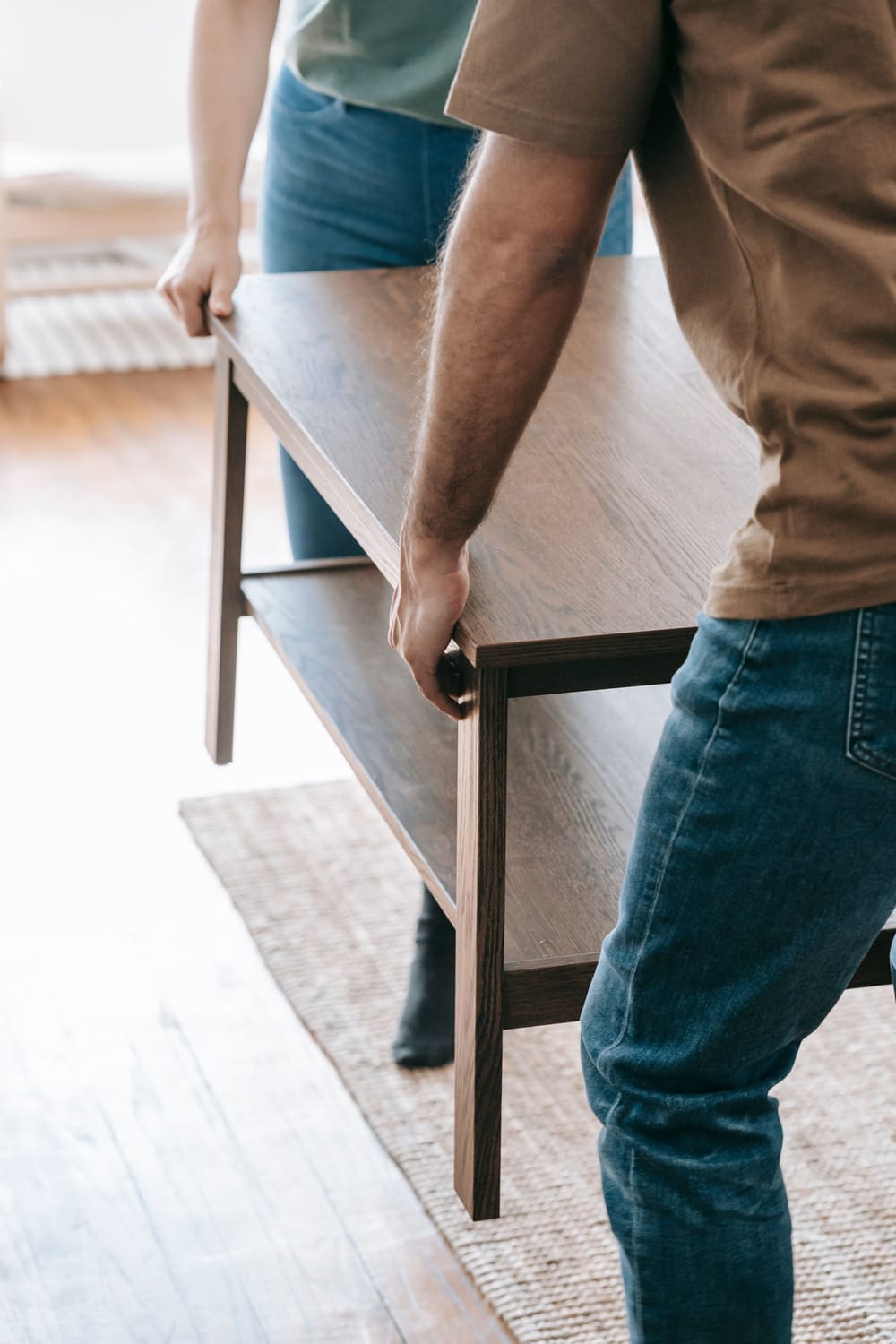
Compensation isn't a problem at first. It becomes a problem when it continues for weeks or months
Why stretching doesn't always solve the problem
This often surprises people.
You've probably been told to stretch your back; maybe it feels good while you're doing it. Perhaps it even eases the pain for an hour or two. But then it comes back.
Why?
Imagine you've been carrying heavy shopping bags for twenty minutes; your arms become exhausted.
Would stretching your forearms solve the problem? Probably not.
The problem isn't that your forearms forgot how to stretch. The problem is they've been doing too much work. The same thing can happen in the lower back.
The muscles that feel tight are often the muscles that have been working overtime.
Stretching them may provide temporary relief, but unless we understand why they're working so hard, the tightness often returns. That's why treatment isn't simply about relaxing muscles. It's about understanding why those muscles became overloaded in the first place.
The surprising role of your glutes
When people think about back pain, they rarely think about their bottom.
Yet the glute muscles are among the most important stabilising muscles in the body.
Every time you:
climb stairs
walk uphill
stand on one leg
lift something from the floor
walk across a room
your glutes should be sharing the workload.
The problem is that modern life doesn't always encourage them to do their job. Many of us spend long periods sitting; we drive more, we move less. Even people who exercise regularly can develop glutes that aren't contributing as effectively as they could. When that happens, other muscles often step in. These include muscles around the hips and lower back that weren't designed to carry so much of the load.
Over time, they become sore.
This doesn't mean weak glutes are the cause of everyone's back pain, but in many people with persistent or recurring lower back pain, helping the glutes function more effectively can reduce the demands being placed on the muscles around the spine.
Common misconception
Strong glutes aren't just for runners or people who go to the gym. They help all of us stand, walk, lift, climb stairs and stay stable during everyday life.
Why sitting all day can make your back ache
Have you ever noticed that your back feels worse when you stand up after sitting?
Perhaps getting out of the car is uncomfortable. Or the first few steps after a long meeting feel stiff before things loosen up.
One possible contributor is the hip flexors. These muscles sit at the front of the hips and help lift your knee when walking. When we spend hours sitting, they remain in a shortened position.
Over time, they can become less flexible.
For some people, this increases the pull on the front of the pelvis, making it harder to stand fully upright without placing extra demand on the lower back.
It doesn't mean tight hip flexors are the answer for everyone. Back pain is rarely that simple. But when someone tells me, "I'm fine once I've been walking for five minutes, but standing up is awful," my assessment immediately starts exploring whether the hips are contributing.
This is why a movement assessment is often more useful than simply asking someone to point to where it hurts.
What your symptoms might be trying to tell you
Although no single symptom can tell us exactly what's causing back pain, certain patterns often provide useful clues.
For example:
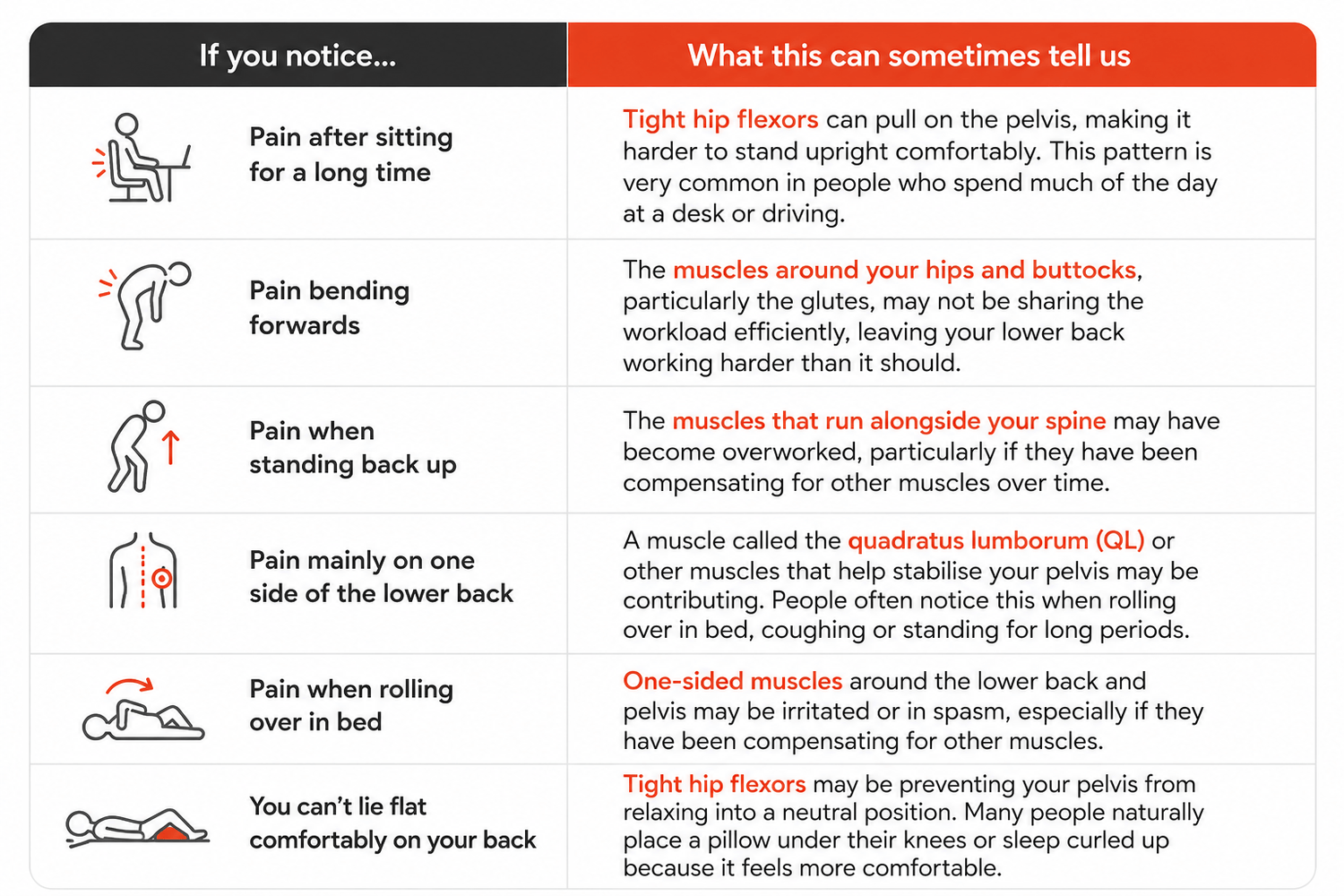
The more clues we gather, the clearer the picture becomes.
Every back pain story is different
One of the first things I explain to new patients is that I don't have a standard set of acupuncture points that I use for every person with back pain.
Two people can arrive with pain in exactly the same place but need completely different treatment.
That's because I'm treating the reason your back has become painful, not just the painful spot itself.
Before we even think about placing needles, I want to understand how your body is moving.
The assessment starts before the needles
During your first appointment, we'll spend time talking through your symptoms and carrying out a movement assessment.
I'm interested in questions such as:
When did the pain begin?
Was there a specific injury?
What movements bring it on?
Is sitting worse than walking?
Does bending forwards hurt more than standing back up?
Is it painful to roll over in bed?
Does the pain travel into your buttock or leg?
Have you noticed stiffness around your hips?
I'll also ask you to perform a few simple movements. These aren't fitness tests. They're simply a way of seeing how your body moves together. Sometimes the movement that reproduces your pain tells us more than an MRI alone could.
For example, someone who struggles to stand upright after sitting may need a very different treatment approach from someone whose pain appears only when bending forwards.
It's these patterns that help guide my assessment.
In clinic
I often ask patients how they feel after the treatment. If there is still significant pain, I start investigating whether there are any trigger points in the muscles I suspect
Looking beyond where it hurts
One of the biggest differences between my approach and what many people expect from acupuncture is that I don't only treat the painful area.
If your lower back hurts, I may also assess your:
glutes
hip flexors
muscles around your pelvis
hip movement
walking pattern
That surprises many people. But once you understand that muscles work together, it starts to make sense. If one muscle isn't contributing effectively, another often compensates.
Treating only the painful muscle is a little like continually replacing a blown fuse without asking why it keeps blowing. We need to address the reason the muscle became overloaded in the first place.
Why I combine different styles of acupuncture
People are often surprised to learn that there isn't just one style of acupuncture.
In my clinic, I combine several approaches depending on your symptoms and what I find during the assessment. These include:
traditional acupuncture
Western medical acupuncture
electroacupuncture
motor point acupuncture
trigger point acupuncture
Each has a different purpose, and they often work best when used together.
Traditional acupuncture
Traditional acupuncture is based on principles that have developed over thousands of years.
It looks at the body as an interconnected system and aims to restore balance by selecting acupuncture points that support the body's natural healing processes.
Depending on the person sitting in front of me, this may also include treating factors such as stress, sleep or energy levels alongside the musculoskeletal problem.
Western medical acupuncture
Western medical acupuncture approaches pain from a modern understanding of anatomy, physiology and neuroscience.
Rather than thinking primarily in terms of traditional acupuncture channels, it focuses on muscles, nerves and connective tissues.
This approach fits particularly well with back pain because it allows treatment to be directed towards the muscles that appear to be contributing to your symptoms.
What is electroacupuncture?
One of the questions I'm asked most often is: "Are the needles connected to electricity?" Sometimes, yes.
Electroacupuncture uses a small battery-powered device that delivers a very gentle electrical current between selected acupuncture needles. Most people describe it as a comfortable pulsing or tapping sensation rather than anything painful.
The purpose isn't to make treatment stronger. It's to help certain muscles relax or contract in a controlled way while also providing continuous stimulation throughout the treatment.
I often use electroacupuncture when treating persistent muscle tension, sports injuries and ongoing back pain.
Common misconception
Electroacupuncture isn't the same as a TENS machine.
A TENS machine delivers stimulation through sticky pads placed on the skin. Electroacupuncture delivers a much smaller electrical current directly through the acupuncture needles, allowing much more precise stimulation of specific muscles.
Motor points: helping muscles work more efficiently
One of the techniques I use regularly for back pain is motor point acupuncture.
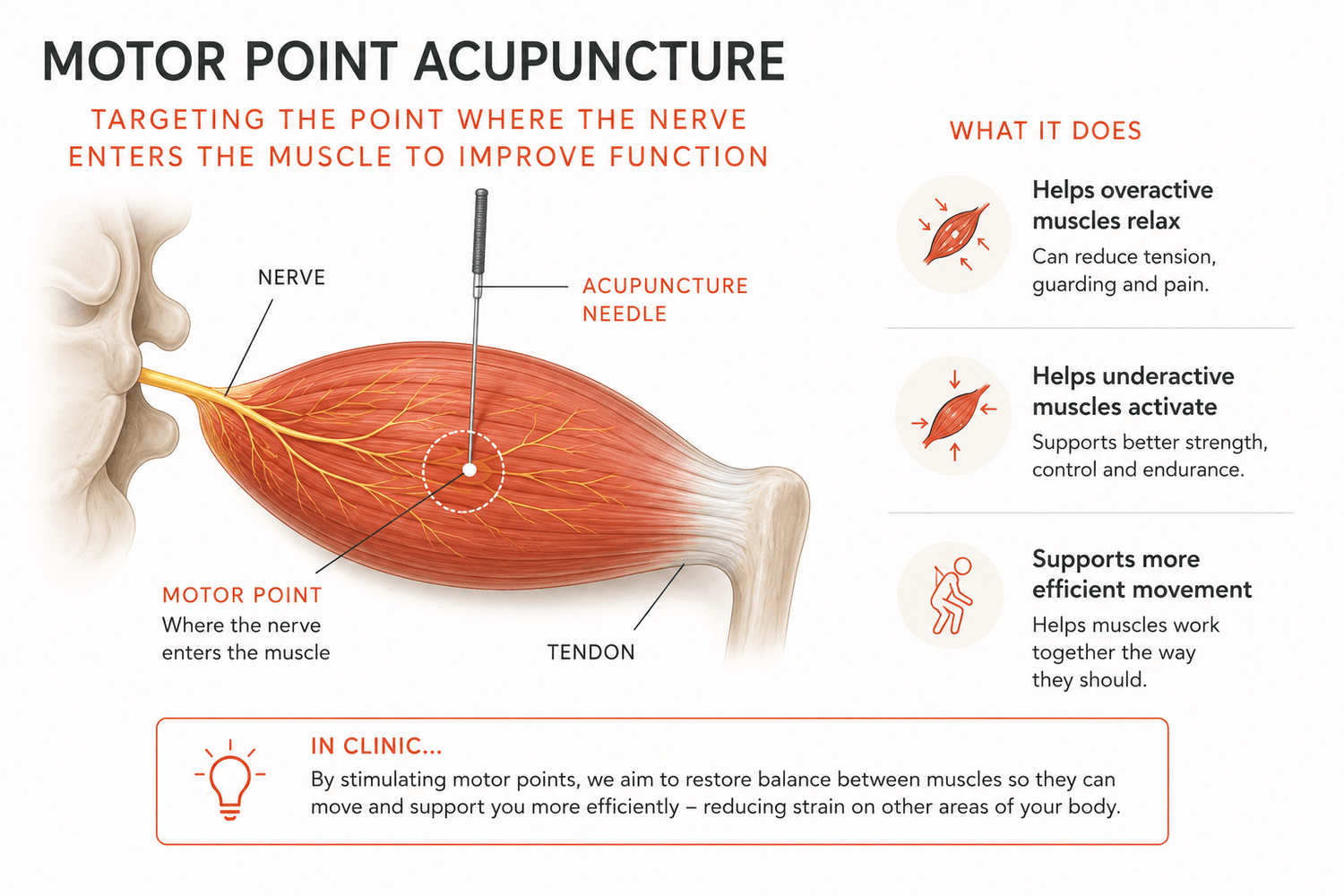
A motor point is the area where a nerve enters a muscle.
Stimulating these points with acupuncture can be an effective way of helping muscles that have become overactive to relax and muscles that have become less active to contract more effectively. If a muscle isn't contributing properly during movement, another muscle often has to compensate.
Over time, this can contribute to ongoing tension, stiffness and discomfort.
By encouraging muscles to work more efficiently together, motor point acupuncture aims to improve movement rather than simply reducing pain. This approach forms an important part of my treatment for many musculoskeletal conditions, including back pain.
Trigger points: treating stubborn areas of muscle tension
Sometimes, releasing the larger muscles isn't enough.
People with long-standing pain often develop small, tight bands within muscles known as trigger points. You may have felt one before without realising what it was.
Perhaps you've pressed into your shoulder or buttock and found one very sore spot that seems to recreate your familiar pain.
Trigger points can develop after injury, repetitive movements or prolonged muscle overload. In some people, they continue to limit movement even after the original injury has healed.
When appropriate, I use trigger point acupuncture to help release these tight bands, improve movement and reduce pain. Motor points and trigger points are different techniques, but they often complement each other. Motor points focus on improving how muscles function. Trigger points focus on releasing areas of persistent muscle tension within those muscles.
Acupuncture is only one part of the plan
Although acupuncture is an important part of treatment, it's rarely the whole story.
Muscles don't recover in isolation. They're influenced by:
how much we move
how well we sleep
stress levels
nutrition
recovery after exercise
our daily habits
That's why I often combine acupuncture with practical advice tailored to you.
Sometimes this means simple mobility exercises. Sometimes it's changing how often you break up long periods of sitting. Sometimes it's looking at recovery after exercise or making sure you're eating enough protein to support muscle repair.
Small changes can make a surprising difference when they're directed at the right problem.
My goal isn't simply to help you leave feeling better after one appointment. It's to help you understand your body well enough that the pain is less likely to keep coming back.
Common causes of lower back pain
One of the questions I hear most often is: so... what's actually causing my back pain?
Unfortunately, there isn't always a simple answer. Lower back pain is usually the result of several factors working together rather than one structure suddenly "going wrong".
That's why a thorough assessment is so important. Here are some of the most common causes I see in clinic:
Muscle strain and overload
This is probably the most familiar type of back pain. Perhaps you:
lifted something awkwardly
spent all weekend gardening
increased your gym training
painted the ceiling
moved house
Often people say: "I didn't even lift anything heavy."
Sometimes it isn't one dramatic movement. It's hundreds of small movements over several days that eventually exceed what the muscles can comfortably cope with.
The good news is that muscles usually recover well when the contributing factors are identified and addressed.
When your muscles have been compensating for months
Sometimes patients tell me: "Nothing happened." There wasn't an injury. No heavy lifting. No awkward twist.
They simply woke up one morning with back pain.
Often this is because the body has been compensating for weeks or months before finally reaching a point where symptoms appear.
That's why people are often surprised when I spend time assessing their hips, glutes and movement patterns rather than focusing only on their lower back. Pain rarely appears out of nowhere. Your body has usually been adapting long before you became aware of it.
Sciatica
Sciatica is a description of pain travelling along the course of the sciatic nerve. People often describe:
pain travelling into the buttock
pain down the back of the leg
tingling
numbness
burning pain
Sciatica can have several different causes.
Sometimes it's related to irritation of a spinal nerve. Sometimes muscles around the buttock become tight enough to contribute to symptoms. Sometimes more than one factor is involved.
That's why it's important not to assume that every pain travelling into the leg is exactly the same. A proper assessment helps identify what may be contributing in your individual case.
Disc changes
As we get older, changes within the spine become increasingly common.
In fact, many people who have disc changes on an MRI have little or no back pain at all. Equally, someone with significant pain may have relatively minor changes on a scan.
This is one reason why scans are only one piece of the puzzle. Your symptoms, movement, medical history and physical examination are just as important.
Common misconception
A scan doesn't always explain pain. Many age-related changes are a normal part of getting older and don't necessarily need fixing.
Arthritis
Wear-and-tear changes in the spine become more common as we age. Some people experience stiffness first thing in the morning. Others notice discomfort after standing for long periods.
Many people worry that arthritis means they should stop moving. In fact, gentle movement is usually one of the best things you can do.
The right type of exercise helps joints stay healthier and muscles continue supporting the spine.
Sacroiliac (SI) joint pain
The sacroiliac joints sit where the base of your spine meets your pelvis. Pain from this area is often felt on one side of the lower back or into the buttock.
People sometimes notice it:
climbing stairs
turning over in bed
standing on one leg
getting out of the car
Several muscles help stabilise this area, which is one reason I don't simply treat the joint itself. Understanding how those muscles are working together often forms an important part of treatment.
Back pain during pregnancy
Pregnancy places increasing demands on the lower back and pelvis as your body changes. Hormonal changes, altered posture and the growing weight of your baby can all influence how muscles and joints are loaded.
Many pregnant women experience discomfort around the lower back, buttocks or pelvis, particularly later in pregnancy.
Acupuncture can often be adapted safely during pregnancy by using points that are appropriate for each stage or combining them with alternative therapies such as cupping. As with all treatment during pregnancy, your care should always be tailored to you.
When back pain is influenced by more than muscles
One of the reasons I enjoy combining acupuncture with naturopathy is that muscles don't recover in isolation.
Sleep, stress, recovery, nutrition. They all influence how well your body heals.
For example, someone who's sleeping poorly because of stress may notice their muscles remain tight for longer after exercise. Someone who's under-fuelling or not eating enough protein may recover more slowly from training. That doesn't mean these factors cause back pain on their own. But they can influence how quickly your body recovers. Looking at the bigger picture often helps create a more sustainable recovery.
Can acupuncture help lower back pain?
Research suggests acupuncture can help reduce pain and improve function for some people with persistent lower back pain.
Exactly how it works is still being investigated, but current evidence suggests several mechanisms may be involved, including effects on the nervous system, pain processing and muscle function.
In my clinic, I don't view acupuncture as a stand-alone solution. Instead, I see it as one part of a personalised treatment plan that may also include:
movement advice
exercises
education about pain
lifestyle recommendations
support with recovery
My aim is always the same: to help you understand why your symptoms developed and what we can do to reduce the chances of them returning.
What you can do at home
Although every case is different, there are a few general principles that help many people with back pain.
Keep moving
Complete bed rest is rarely helpful for simple mechanical back pain. Gentle walking and regular movement usually support recovery better than staying completely still.
Avoid sitting for long periods
If you work at a desk, try standing up every 30–60 minutes.
Even a short walk to make a cup of tea can help reduce stiffness.
Heat often feels good
Many people find a hot water bottle or heat pack helps relax tight muscles.
Heat won't solve the underlying problem, but it can make movement more comfortable.
Don't be afraid of movement
People often worry they'll make their back worse. In reality, gentle movement is usually one of the most important parts of recovery. The key is choosing the right type of movement for your situation.
Recovery matters too
Good sleep, managing stress, eating enough protein and allowing time for recovery after exercise all support healthy muscle function. They're not quick fixes, but they often make a meaningful difference alongside treatment.
When should you seek medical advice urgently?
Although most back pain isn't caused by anything serious, you should seek prompt medical advice if you develop:
numbness around the saddle area
difficulty controlling your bladder or bowels
rapidly increasing weakness in one or both legs
severe pain following significant trauma
unexplained weight loss, fever or feeling generally unwell alongside back pain
pain that doesn't improve and continues getting progressively worse
These symptoms need prompt medical assessment.
Frequently asked questions about acupuncture for back pain
Does acupuncture hurt?
This is usually the first question people ask. The needles used for acupuncture are much finer than those used for injections or blood tests. Most people feel very little as they're inserted.
Depending on the technique being used, you might notice a dull ache, a feeling of warmth, heaviness or a gentle muscle twitch, particularly when treating muscles. These sensations are usually brief and are often a sign that the muscle has responded to the treatment.
If you're nervous about needles, let me know. Treatment can always be adapted to help you feel as comfortable as possible.
How many sessions will I need?
There isn't one answer that fits everyone. It depends on factors such as:
how long you've had the pain
what's contributing to it
whether it's your first episode or something that keeps returning
your general health
how your body responds to treatment
Many people notice some improvement after their first session. For more persistent or recurring back pain, I usually recommend a course of treatment to give the muscles and nervous system time to respond.
At your first appointment, I'll discuss what I think is realistic for your situation so you know what to expect.
Can acupuncture help sciatica?
It can help some people, depending on what's contributing to the symptoms. "Sciatica" simply describes pain travelling along the sciatic nerve. It doesn't tell us why it's happening.
Some people have irritation of a spinal nerve. Others have muscles around the buttock or pelvis contributing to their symptoms. The first step is always understanding what's driving the pain before deciding on the most appropriate treatment.
Can I have acupuncture if I have a bulging or slipped disc?
In many cases, yes. Having disc changes on a scan doesn't automatically mean acupuncture isn't appropriate. During your assessment, we'll discuss your symptoms, your scan results (if you've had one) and carry out a physical examination to decide whether acupuncture is suitable or whether further medical assessment would be more appropriate.
Is electroacupuncture safe?
For most people, yes. Electroacupuncture uses a small battery-powered device that delivers a gentle electrical current between selected acupuncture needles. Many people actually find the rhythmic pulsing very relaxing. However, it isn't suitable for everyone. For example, it's generally avoided in people with certain implanted electrical devices, such as pacemakers, and there are situations where other techniques are more appropriate.
If electroacupuncture isn't suitable for you, there are plenty of other treatment options available.
Should I have acupuncture or physiotherapy?
It doesn't have to be one or the other. Physiotherapy and acupuncture often complement each other very well. Physiotherapy is excellent for rehabilitation, exercise prescription and restoring movement. Acupuncture can help reduce pain, improve muscle function and make it easier for some people to perform the exercises they're given. Many of my patients have both treatments as part of their recovery.
Can I exercise after acupuncture?
Usually, yes. In fact, gentle movement after treatment is often encouraged. Depending on your symptoms, I may suggest avoiding a particularly demanding gym session on the same day, but walking and normal daily activities are generally beneficial. We'll discuss what's appropriate for you before you leave the clinic.
What should I wear to my appointment?
Loose, comfortable clothing is ideal. For back pain, I often need access to the lower back, hips or legs, so clothing that allows these areas to be reached easily is helpful. If needed, towels are available to ensure you're comfortable throughout treatment.
When should I see a GP instead?
Acupuncture is appropriate for many types of back pain, but it's important to recognise when further medical assessment is needed. If you develop symptoms such as significant leg weakness, changes in bladder or bowel function, numbness around the saddle area or pain following significant trauma, you should seek urgent medical advice. If I think your symptoms need further investigation, I'll always explain why and advise you accordingly.
The bottom line
Back pain can be frustrating.
It can stop you exercising, interrupt your sleep, make sitting at work uncomfortable or even make simple jobs around the house feel like a challenge.
The encouraging news is that back pain is rarely something you simply have to "put up with".
Understanding why it's happening is often the first step towards improving it. That means looking beyond the painful area, understanding how your body moves and creating a treatment plan that's tailored to you.
Whether your symptoms started after lifting something heavy, sitting at a desk for years or appeared gradually over time, the right assessment can often provide answers that haven't been explored before.
Ready to take the next step?
If you're looking for acupuncture for back pain in Honor Oak, Forest Hill, East Dulwich or Peckham, I'd be happy to help.
During your first appointment, we'll take time to understand your symptoms, assess how your body moves and create a personalised treatment plan that fits your goals, whether that's getting back to the gym, playing with your children, gardening, or simply being able to get through the working day more comfortably.
Book your initial consultation today, and let's start working out what's really driving your back pain.
Want to Work Together?
Explore my services below or go ahead and book your first appointment.

Subscribe to our newsletter
Acupuncture and naturopathy lifestyle advice straight into your inbox
Copyright © 2026 by Sarah Shorter | Website Disclaimer | Privacy Policy